
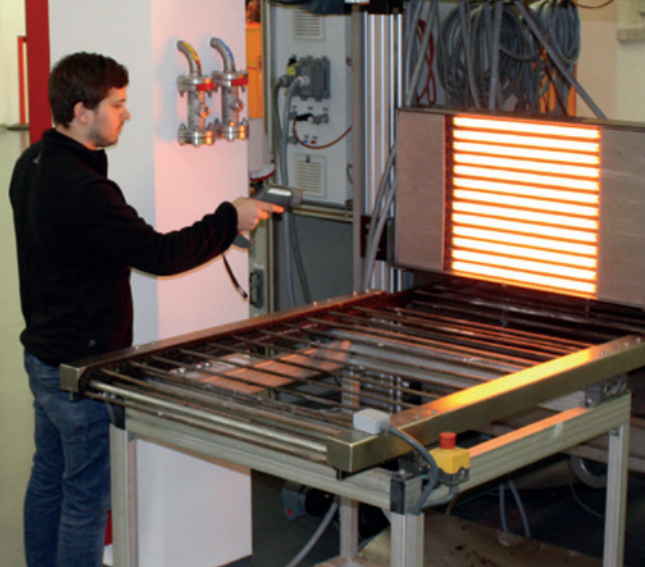
Why Stop Waiting on Your Oven? IR vs. Hot Air for Hydrogen Sensors
If you’re making hydrogen sensors, you know the drill. You’ve got catalyst layers to activate and membranes to stabilize, and it all comes down to how you handle the heat. A lot of shops are still using those big hot air circulation ovens. Honestly? It’s a bottleneck. When you rely on forced air, you’re basically heating up a giant room of air just to get the air to heat your part. It’s slow. It’s tedious. It feels like waiting for a pot of water to boil when you just want a quick sear. The shortcut is Infrared (IR). Instead of messing around with the air, IR just skips the middleman. It uses electromagnetic radiation to hit the sensor substrate directly. The difference in speed is wild. Your ramp-up times shrink, your soak periods get shorter, and you move parts through the line way faster. You get the same thermal profile, just without the agonizing wait. Getting it right When you’re setting up an IR system, the trick is wavelength matching. You usually want shortwave or medium-wave IR so the energy actually sinks into the sensor’s coating. There’s no “waiting for the chamber to reach temperature” here. You flip the switch, the lamp hits the part, and you’re at temp in seconds. It’s almost instant. The one thing to watch out for Now, IR is aggressive. Since the heat is so direct, it can be a bit too much if you aren’t careful. If your PID loops aren’t tuned or your lamp is too close to the sensor, you’ll overshoot your target temperature. And if that happens? You’ll burn your catalyst. It’s a quick way to ruin a batch. You need a rock-solid mounting footprint and a tight feedback loop to make sure the heat stays even across the whole wafer. What this actually does for your shop Moving to IR is usually the first thing people do when they need to scale. For one, you save a ton of floor space. You can ditch those massive air-handling units and swap in a much smaller footprint. Your hourly throughput goes up because you aren’t babysitting a slow oven. You’ll need to make sure your cooling system can handle the concentrated heat, but in exchange, you get your time back. And in this business, time is everything.