


Infrared vs. Hot Air: Stop Wasting Time on Your Wafers
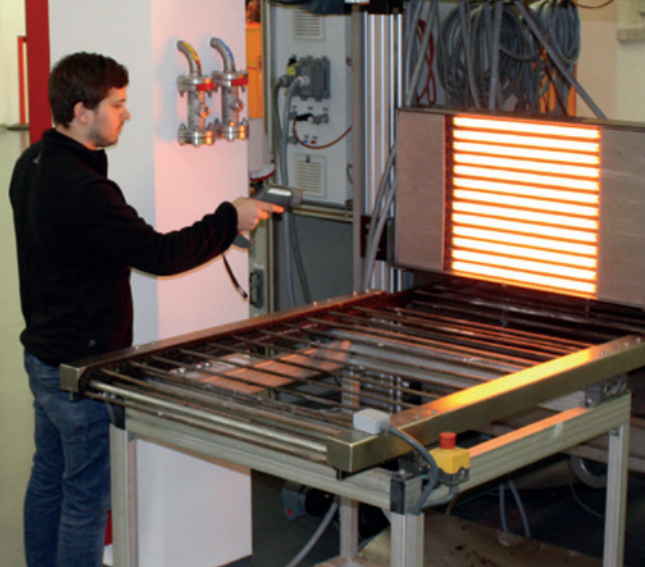
Think about how hot air works. You heat the air, and then the air eventually heats the wafer. It’s a slow process. There’s this annoying lag where you’re just… waiting. In deep semiconductor processing, that lag isn’t just a nuisance—it’s a cost. Infrared (IR) heating just cuts out the middleman. Instead of messing around with the air, it beams energy directly onto the wafer surface. Why it’s actually faster Air is a terrible conductor of heat. If you use convection, you’re spending minutes just trying to get the chamber up to temp. With IR lamps, you hit your target in seconds. This is where Rapid Thermal Processing (RTP) really shines. By tweaking the wavelength—switching between short-wave and medium-wave—you can decide exactly how deep that heat sinks into the silicon. It’s a lot smarter than blasting the entire chamber wall with energy just to get a single wafer to 600°C. The “Goldilocks” distance Now, you can’t just shove an IR lamp right up against the wafer. That’s a recipe for disaster. If the lamp is too close, you’ll get localized hotspots or, worse, you’ll burn the edges of the wafer. But if you push it too far back, your heat flux drops and you’re right back to those long, boring cycle times. It’s all about that sweet spot. We calculate the gap based on the wattage needed per square centimeter to make sure the heat is spread evenly across the whole diameter. The catch Here’s the thing: IR is fast, but it’s not as forgiving as hot air. Hot air gives you a natural buffer. IR is aggressive. If your PID controller isn’t dialed in or your sensors are a bit sluggish, you’ll overshoot your temperature target before you even realize it. You need feedback loops that react in a heartbeat to kill the lamps the second you hit your set point. Plus, you’ve got to make sure your power supply can handle the massive current draw of those IR arrays without dipping.