
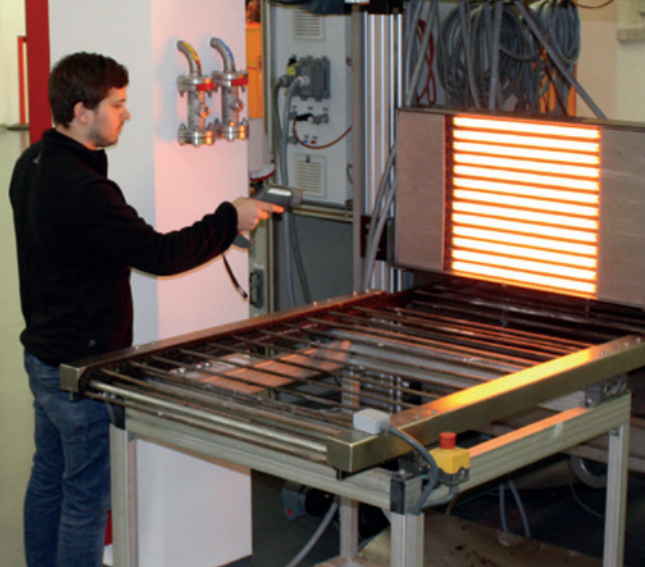
Getting IR Heating Right in Your Smart Glovebox
When you’re picking out a glovebox for a modern Fab, you quickly realize that heat isn’t just about a number on a screen. It’s about control. Most people are used to those old-school convection heaters. But in a smart factory, those just don’t cut it. That’s why we’ve moved toward infrared (IR) elements. Instead of trying to warm up every single molecule of inert gas inside the box, IR goes straight for the target. It’s cleaner, faster, and just makes more sense. The struggle with thermal lag Here is the problem with standard resistive heaters: they’re sluggish. They take forever to warm up and even longer to cool down. It’s frustrating when you’re waiting on your equipment to catch up to your process. We use short-wave IR elements because they react almost instantly. You tweak the voltage, and the heat responds. Right then. This lets your PLC keep the temperature exactly where it needs to be without that annoying “overshoot” you get with older systems. If you need to cycle temperatures quickly or hit specific zones, this is the only way to actually do it. Fitting it all in Gloveboxes are cramped. The last thing you want is a heating element that creates a “hot spot” and melts your seals or ruins your gloves. That would be a nightmare. To avoid that, we use high-density quartz or halogen elements. They’re small, but they pack a punch. Plus, we wire them into modular power supplies. So, when a tube eventually burns out—and they always do—you just pop a new one in and keep moving. No need to tear the whole system apart. The one catch Now, there is a trade-off. These IR elements put out a lot of concentrated heat. That’s great for getting up to temperature fast, but it puts a real strain on your cooling system. If your heat exchangers aren’t beefy enough to handle that extra radiation, your internal atmosphere is going to start drifting. You can’t just crank up the heat and hope for the best; you have to make sure your Fab’s HVAC can keep up. It’s all about finding that sweet spot where the power and the cooling balance out.