




Getting Heat Right in Biosensor Fabrication
When you’re building biosensors, heat is a tricky beast. You need it to cure your polymers and wake up your biological reagents, but if you overdo it? Everything is ruined. Your sensitive substrates just can’t take a beating. That’s why we’ve stopped relying on those old-school convection ovens. They’re slow and clumsy. Instead, we’ve moved to infrared (IR) systems. The beauty of IR is that you can point the heat exactly where it needs to go. It shrinks your thermal footprint and makes the whole production cycle move a lot faster.
Stop Guessing, Start Tracking
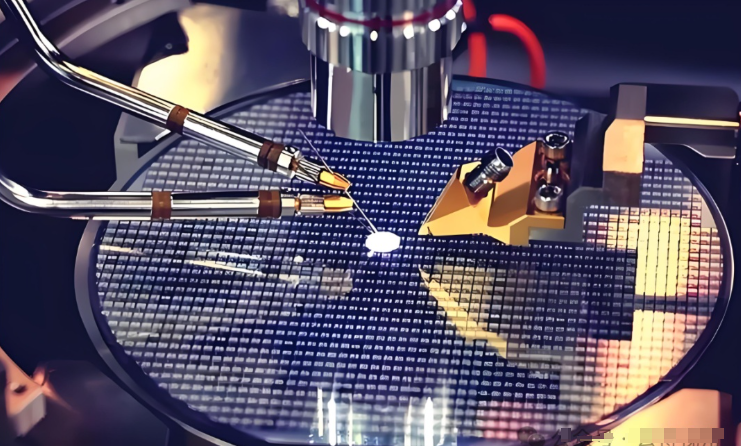
A smart fab is only as good as its data. We make sure our IR systems talk directly to your PLC networks. Why? Because it means you can actually see what’s happening. You can track the wattage and the surface temperature across the wafer in real-time. No more staring at a timer and hoping the ramp-up time was right. You get a repeatable thermal signature for every single batch. It’s a huge relief to know exactly what’s happening inside the machine.
The Physics (Without the Headache)
We use short-wave and medium-wave IR lamps because they actually penetrate the substrate. If you don’t do this, you hit the “skin effect”—where the surface burns to a crisp while the core is still cold. Not a great look. High-density emitters give us the punch we need to trigger rapid polymerization without the mess. But here’s the catch: you have to balance that power. If you crank these lamps to the max, your cleanroom HVAC is going to feel it. If you’re pushing for those ultra-fast cure times, just make sure your cooling manifolds can handle the heat spike. Otherwise, your process window will drift, and you’re right back to square one.
Making it Scale
We’ve gone with a modular IR setup. It’s a simple “drop-in” strategy. When a lamp eventually burns out—and they will—you just swap the unit. You don’t have to spend hours recalibrating the entire line. It keeps the downtime to a minimum. These systems are snappy, too. They go from standby to full power in milliseconds. In a high-throughput line, that kind of precision is everything. Because at the end of the day, if it isn’t consistent, it isn’t working.