
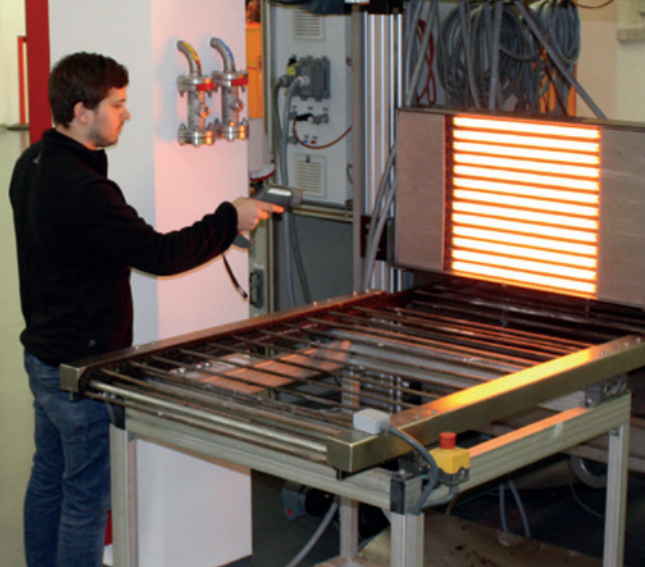
On the lithography floor, a half-degree drift in your Soft Bake profile is enough to knock critical dimension control off its mark. Solvent removal in the photoresist gets inconsistent, and then the Hard Bake locks that error in. Thermal uniformity across the wafer isn’t a perk—it is the process. What matters, technically Quartz halogen infrared emitters put heat right where you need it, fast, with tight spectral control. Their short-wave output is tuned for strong absorption in photoresist, so bake cycles are quick and repeatable. We hold ±0.1°C uniformity across the wafer with closed-loop control, and the response time is measured in milliseconds. Cleanroom compatibility is built in, not bolted on: Class 1–100 compliant materials, zero particle generation under operating conditions, and a build that resists outgassing. Reliability is measurable—5,000+ hours at rated power with less than 5% output drop, so the line can run 24/7. Why it holds up in practice In photoresist processing, you need the same temperature at the same spot, every single time. These emitters stabilize your thermal budget for Soft Bake and Hard Bake, which cuts solvent retention, improves adhesion, and tightens overlay. That same precision carries into etch and cleaning, where controlled surface temperature keeps etch rate predictable and prevents microloading. The payoff is fewer rework lots, less scrap, and thermal delivery you can trust—so your lithography cluster stays in spec. The details that make it work Installation comes down to alignment and clearances. The emitter has to face the target cleanly, with minimal cross-talk to adjacent zones. Pick reflectors and mounting hardware that match your chamber geometry. Plan your power and control wiring for cleanroom use to avoid EMI and keep temperature stable. You get a short ramp-up window to hit setpoint—use it to tune the recipe, not chase it after the fact.