


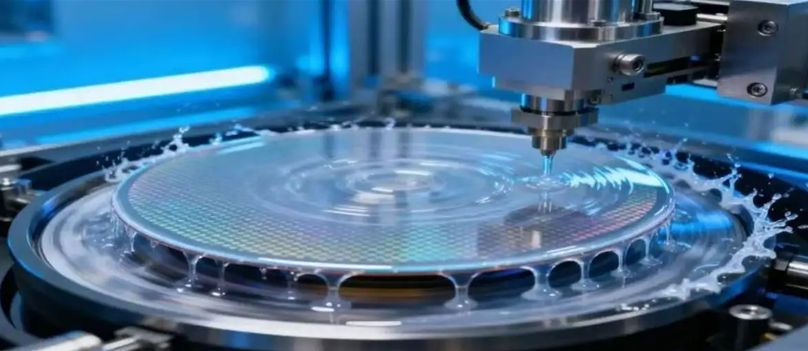
On the lithography floor, a 1°C drift in soft bake will move your critical dimension bias. You’ll see it as linewidth variation across the wafer—and that’s how you scrap hours of process work. The coater/developer IR heater is the thermal heart of photoresist processing: soft bake, hard bake, and drying. If thermal uniformity goes sideways, yield follows.
What matters, technically
We build these infrared heaters around short-wave sources that respond fast, heating through the thickness so temperature settles in seconds, not minutes. Across the bake surface, wafer-level uniformity holds within ±0.1°C, which cuts local CD and thickness excursions. The package is cleanroom-compatible from Class 1 to Class 100. Low-outgassing materials and a particle-controlled path keep contamination out of the process chamber. Zero particle generation isn’t a slogan—it’s a design constraint enforced by surface finish, sealing, and airflow routing.
Why it works in coater/developer tracks
In the track, the IR heater gives you stable control of the photoresist thermal budget. Soft bake repeatability tightens solvent removal, which lowers standing wave risk and gives you better sidewall profile control. Hard bake consistency improves adhesion and etch resistance. The payoff: fewer rework lots, less scrap, and a process window that stays stable across lots and tools. Infrared couples energy directly into the resist and wafer, so you use less energy and waste less heat into fixtures and exhaust. Reliability is engineered for 24/7 fab life—predictable maintenance intervals, and consistent output over thousands of bake cycles.
What you need to know
Installation means matching the heater footprint, mounting tolerances, and coolant connections to the coater/developer platform, then aligning the optical path to the wafer plane. Commissioning is quick—just tune ramp rates and soak times to your resist stack. One constraint: infrared response is sensitive to reflective or low-emissivity surfaces. If the wafer backside or carrier has unusual coatings, you may need emissivity compensation. Qualify the unit with your resist and substrate stack, then lock the recipe. Once it’s set, the process stays repeatable—shift to shift, lot to lot.