
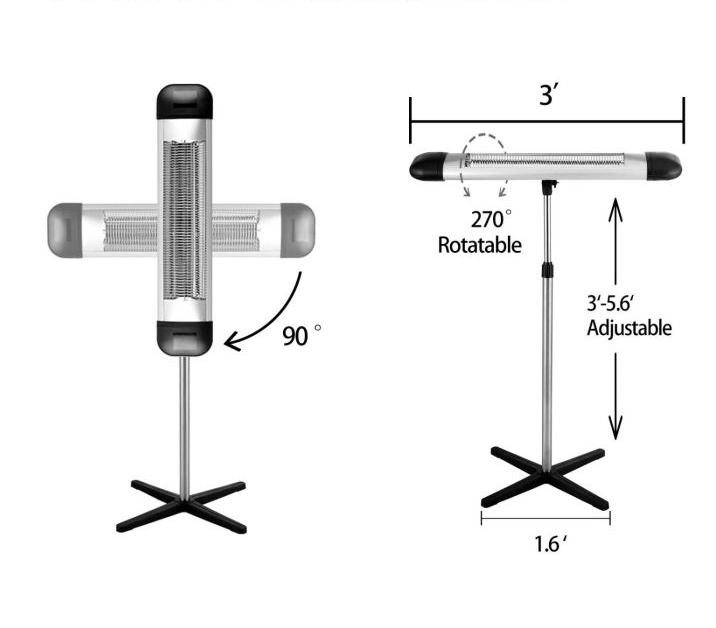
Glass ceilings and walls make an attic sunroom feel like a light-filled retreat—until the temperature drops. Standard convection heaters fight an uphill battle here. They warm the air, but that heat shoots straight up and bleeds right back out through the glass. You end up running the heater and still feeling chilly. Infrared wall heaters cut through that problem by warming people and surfaces directly, not the air.
What matters under the hood
Infrared wall heaters deliver radiant warmth using either quartz tubes or carbon fiber elements, producing medium- to long-wave infrared energy. It’s directional heat—think of it as a focused beam that travels cleanly through the air to warm floors, furniture, and you. Most models come as 120V or 240V hardwired units, with outputs from 1,500W to 3,000W, and they’re designed for wall mounting so you keep floor space open. Built-in thermostats hold the set temperature, while tip-over protection and overheat shutoff add real-world safety. In a sunroom, an IP-rated housing is a smart move to keep dust and moisture out.
Why it fits the sunroom problem
In an attic sunroom, the real issue isn’t just room volume—it’s heat loss through glass. Infrared heats solid objects and the floor, and those surfaces re-radiate warmth, which helps stabilize comfort. Because the heater targets surfaces, it doesn’t waste effort fighting constant air exchange near the windows. You feel the warmth almost instantly, and the thermostat keeps things steady, so you don’t get that on-off chill you see with air-based systems. The upshot is even comfort, with less energy spent chasing heat that keeps rising and escaping.
The practical details
Infrared wall heaters perform best when aimed at primary seating areas and kept clear of obstructions. They warm what they “see,” so plan for line-of-sight coverage. They’re electric and need a dedicated circuit. If your sunroom runs humid, pick a heater rated for damp locations. They don’t dry the air the way forced-air options can, but you get quiet operation and warmth that stays targeted. Mount it securely, set the thermostat, and you’re done—let in the light, leave the chill behind.