
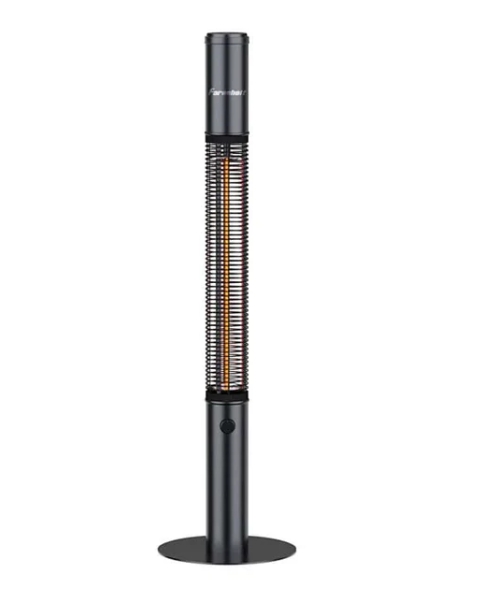
Why You Can’t Just Put Any Heater in a Shower
Let’s be honest: putting high-voltage electricity in a room full of steam and splashing water is a recipe for disaster. If you use a standard quartz lamp in a shower, it’s not a matter of if it fails, but when. That’s why we don’t mess around. We use IPX5 rated enclosures and explosion-proof quartz tubes. It sounds technical, but here is what that actually means for you.
The “Cold Drop” Problem
An IPX5 rating is great—it means the unit can take a blast of water from any angle and keep ticking. But the real enemy is something much smaller: a single drop of cold water. Imagine a quartz tube glowing at 600°C. Now imagine a cold droplet hitting it. The glass shrinks instantly in that one tiny spot, creating a stress fracture.Pop. We use explosion-proof quartz to stop that from happening. These tubes are built to handle that kind of thermal shock. And if the glass does happen to crack? The “explosion-proof” design keeps the shards contained. You won’t have glass flying across your bathroom.
Instant Heat, No Mess
We went with short-wave infrared lamps because nobody wants to wait ten minutes to feel warm after a shower. These things ramp up fast. You feel the heat the second you flip the switch. To make sure the electronics stay dry, we use sealed gaskets and moisture-resistant terminals. It stops water from “creeping” into the electrical contacts, which is usually how these units short out.
A Couple of Real-World Warnings
Here’s the thing: these heaters put out a massive amount of warmth, but they’re hungry for power. If you’re running them on a cheap, old breaker, you might trip it. Just double-check that your bathroom circuit can actually handle the peak load before you install them. Also, while the IPX5 casing does the heavy lifting, you still need a grounded GFCI outlet. It’s your last line of defense. Better to have it and not need it than the other way around.