


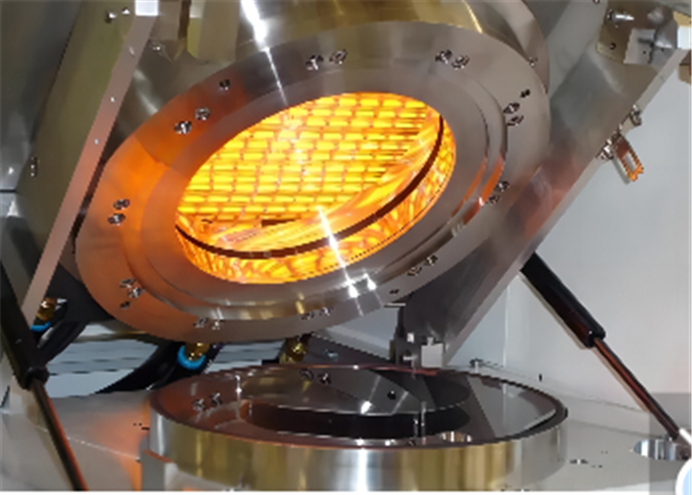
On the fab floor, temperature drift doesn’t show up with a warning light. It shows up as CDs drifting after soft bake, as footing on the profile after hard bake, and as scrap that only shows up after the lot has already burned through photoresist and time. Wafer-level thermal control isn’t a nice-to-have. It’s part of the process budget. What matters, technically We built the plant heating around NIR and medium-wave infrared modules that were designed for semiconductor thermal discipline. The target is ±0.1°C wafer-level uniformity—across the chuck and through the photoresist stack. It runs in Class 1–100 cleanrooms, and we’ve confirmed zero particle generation with in-situ monitoring and downstream defect checks. Run-to-run photoresist bake profiles stay repeatable because the thermal system holds setpoint stability under load, even when batches and wafer sizes shift. The design target is 24/7 reliability with zero unplanned downtime, backed by redundant control paths and a monitored lamp/emitter health model. Why it sticks in lithography In tracks and coat/bake modules, the heat has to answer to resist chemistry, not to the heater’s inertia. Tight thermal uniformity cuts line-width variability and protects overlay by keeping the thermal history consistent, wafer after wafer. Zero particle generation keeps defect density low where it matters—on the patterned layer. The payoff is fewer rework lots, fewer engineering holds, and cycle time that behaves itself. Energy use stays tight too, thanks to fast, controlled ramps and precise dwell control. You lower the per-wafer thermal cost without giving up precision. What you need to plan for Installation is about tight integration with the track or bake module: mechanical clearances, coolant and power routing, and an exhaust strategy that plays by cleanroom rules. The system only performs to spec when the chuck condition and reflector alignment are maintained on schedule. Plan a short qualification run. Map uniformity across the wafer, confirm particle counts, and lock the bake profile before you move it into production.