

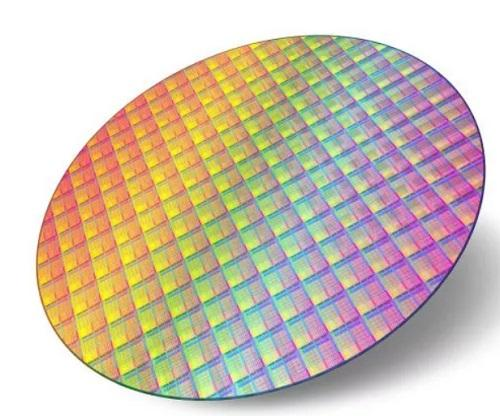
Out on the lithography floor, soft bake and hard bake aren’t just “thermal steps.” They’re the line in the sand between pattern fidelity and a rework ticket you really don’t want. Photoresist is touchy—thermal excursion is not forgiving. A degree or two drift, a hotspot across the wafer, and your CD control falls apart. What matters, technically We run short-wave halogen lamps in a quartz envelope—fast, dry heat with a low particle signature. The spec you live and die by is temperature uniformity across the wafer: ±0.1°C. Repeatability is held to the same band, so every bake lands the same as the last lot. The system is built for cleanroom reality: Class 1 to 100 operation with zero particle generation, verified in-situ. It holds a stable thermal profile under 24/7 duty, and we track output stability over 5,000+ hours. Energy draw is set to the process window, not maxed out, so the thermal budget stays tight. Why it works in photoresist processing You need a bake that pulls solvent out without making the resist flow or building stress. With that window controlled tightly, line-width roughness improves and scumming drops. Process windows open up, and reticle matching gets simpler. Fewer reworks, higher throughput—and you end up using less energy because the lamp hits setpoint quickly and holds it without overshoot. What to expect when you bring it in The lamp integrates cleanly, but the thermal interface has to match your coater/track chamber. Gas flow, mounting tolerance, and thermal mass all matter. Commissioning is short—just tune the PID to your chamber dynamics. Once it’s dialed in, uptime stays solid with minimal maintenance. But the lamp life is finite; plan replacement intervals up front so you don’t get surprised.