
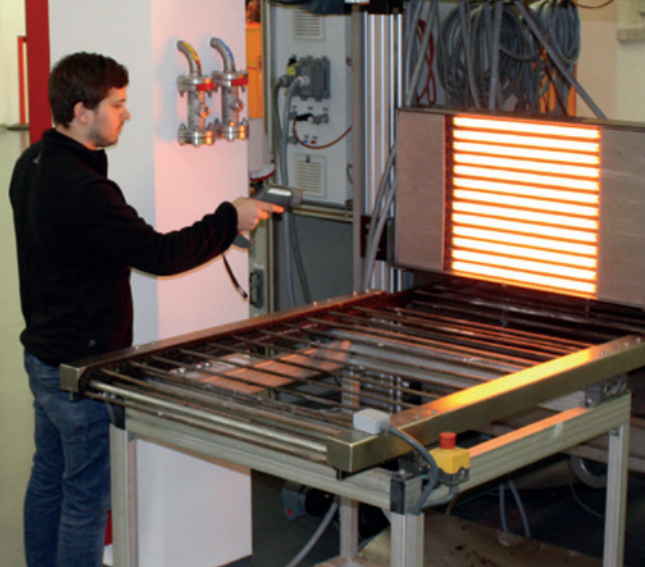
On the lithography floor, you learn fast that a 0.5°C drift in bake temperature will move critical dimensions by nanometers—and that’s how a whole lot of wafers turn into scrap. Short-wave infrared heaters for micro wafer parts hit the problem where it lives, locking thermal behavior inside the process window.
ברצפת הליתוגרפיה לומדים במהירות שסטייה של 0.5°C בטמפרטורת האפייה משנה את המידות הקריטיות בננומטרים—וזה בדיוק איך כמות גדולה של וופרים הופכת לגרוטאות. מחממי אינפרא-אדום בגל קצר עבור חלקי מיקרו-וופרים פוגעים בבעיה במקור, ומייצבים את ההתנהגות התרמית בתוך חלון התהליך.
What matters, technically
מה שחשוב, מבחינה טכנית
We build short-wave infrared emitters with a fast-response quartz envelope, tuned to semiconductor thermal budgets. Across the bake zone, wafer-level uniformity stays at ±0.1°C, so photoresist flow and solvent removal stay repeatable, lot after lot. The heaters run with low particle emission, fitting cleanroom Class 1–100. Output stays stable over 5,000+ hours, with minimal drift.
אנו מייצרים פולטי אינפרא-אדום בגל קצר עם מעטפת קוורץ בעלת תגובה מהירה, המותאמת לתקציבי החום של מוליכים למחצה. ברחבת האפייה, האחידות ברמת הוופר נשמרת בטווח של ±0.1°C, כך שזרימת הפוטורזיסט והסרת הממס נותרות עקביות, מחבילה לחבילה. המחממים פועלים עם פליטת חלקיקים נמוכה, התואמת למחלקות חדר נקי 1–100. תפוקת החום נשארת יציבה מעל 5,000 שעות, עם סטייה מינימלית.
Why this works where it matters
מדוע זה עובד במקום שבו זה חשוב
Soft bake and hard bake set the photoresist profile that carries the mask image. With infrared heating, you get rapid, controlled ramps—shorter bake steps, no overshoot. The payoff is tighter CD control and less scum showing up in the etch steps. Energy use drops, too, because the emitters convert electrical input to heat efficiently and the thermal mass is low.
אפייה רכה ואפייה קשה מגדירות את פרופיל הפוטורזיסט שנושא את דמות המסכה. עם חימום אינפרא-אדום, מתקבלים עליות מהירות ומבוקרות—צעדי אפייה קצרים יותר, ללא חריגה בטמפרטורה. התוצאה היא שליטה מדויקת יותר במידות הקריטיות (CD) ופחות שאריות נראות בשלב החיתוך. גם צריכת האנרגיה יורדת, מכיוון שהפולטים ממירים את הקלט החשמלי לחום ביעילות והמסה התרמית נמוכה.
Here’s what you need to plan for
מה שצריך לתכנן
Installation comes down to matching the tool’s voltage, connector type, and aperture dimensions. You also have to align the emitter to the wafer path—otherwise you lose the uniformity you’re after. Infrared systems need a clean optical path; any shielding or window coating can change the spectrum and shift temperature. Plan on routine calibration to keep that ±0.1°C spec intact.
ההתקנה תלויה בהתאמת המתח, סוג המחבר ומידות הפתח של הכלי. בנוסף, יש ליישר את הפולט עם מסלול הוופר—אחרת תאבד את האחידות הרצויה. מערכות אינפרא-אדום דורשות מסלול אופטיקה נקי; כל מיגון או ציפוי חלון יכולים לשנות את הספקטרום ולהזיז את הטמפרטורה. יש לתכנן כיול שוטף כדי לשמור על המפרט של ±0.1°C.